What to Know Before Your First Brazilian Jiu Jitsu Class
Your first Brazilian Jiu Jitsu class should be exciting, not stressful. You do not need to know any techniques before you arrive, and nobody expects you to understand the terminology or know how everything works.
There are, however, a few basic hygiene and etiquette rules that are important from day one. BJJ is a close-contact sport, so cleanliness, consideration for your training partners, and basic mat safety matter a lot.
Come to Class Clean
Because Brazilian Jiu Jitsu involves constant close contact with other people, personal hygiene is part of being a good training partner.
- Shower or bathe before class whenever possible. You do not need to step out of the shower and immediately onto the mat, but you should arrive clean.
- Wear clean underwear. This may sound obvious, but BJJ involves a lot of movement, close contact, and unusual positions. Clean undergarments are a basic courtesy.
- Use deodorant. You are going to sweat. That is normal. Showing up already smelling strongly before class starts is avoidable.
- Brush your teeth or otherwise make sure your breath is reasonably fresh. You will spend a lot of time very close to your training partners.
- Keep your fingernails and toenails trimmed. Long or sharp nails can easily scratch someone during training.
Your Gi and Training Clothes Need to Be Clean
Never wear a dirty gi, rash guard, shorts, or other training gear to class.
Your gi should be washed after every training session. The same goes for rash guards, spats, shorts, and anything else that directly contacts your body or the mat.
Do not hang up a sweaty gi and wear it again the next day. Even if it does not smell terrible to you, bacteria can multiply quickly in damp training clothes.
If you are attending a trial class and do not own a gi yet, let us know. We typically have loaner gis available for first-time students. For no-gi classes, athletic shorts and a fitted athletic shirt or rash guard are usually appropriate.
You Usually Do Not Need to Arrive Wearing Your Gi
In most cases, you can arrive in normal clothes and change into your gi at the gym. Our locations have changing rooms where students can get ready before class.
There is no expectation that you drive to the academy already wearing your gi.
If you are unsure about where the changing facilities are located, just ask. A staff member or fellow student will be able to point you in the right direction.
Wear Shoes Off the Mat, but Never on the Mat
One of the most important rules in a BJJ academy is simple:
No shoes on the mats.
Outdoor shoes track dirt, bacteria, and other contaminants into the gym. Take them off before stepping onto the training area.
On a similar note: you should not walk barefoot into the bathroom and then return to the mat.
Bring Bathroom Shoes
We expect our students to wear a clean pair of sandals or another easy pair of shoes whenever they leave the mat, especially when using the restroom.
A typical routine looks like this:
- Step off the mat.
- Put on your sandals.
- Walk to the bathroom.
- Return to the edge of the mat.
- Take your shoes off.
- Step back onto the mat barefoot.
Walking barefoot into a restroom and then returning to the training mat is unhygienic. Please do not do it!
Do Not Train When You Are Sick
If you are sick, stay home.
This includes contagious illnesses such as colds, flu, stomach bugs, COVID, and anything else that you could reasonably pass to your training partners.
BJJ is not a sport where you can easily maintain personal space. You will be breathing heavily, sweating, gripping each other, and spending extended periods of time in close physical contact.
Missing one or two classes is far better than getting half the academy sick.
Do Not Train With a Suspicious Skin Condition
Skin infections are taken very seriously in grappling sports.
If you have an unexplained rash, open sore, unusual bump, infected cut, ring-shaped irritation, or anything else that looks suspicious, do not train until you know what it is and it is safe for you to return.
This is particularly important because infections such as ringworm, impetigo, and staph can spread through direct skin contact and contaminated surfaces.
Do not simply cover a suspicious area with tape or clothing and assume that makes it safe.
If you are unsure whether something is safe, ask a healthcare professional and let your instructor know before getting on the mat.
Cover Cuts and Minor Wounds Properly
Small cuts and scrapes happen. If you have a minor wound that is otherwise safe to train with, it should be thoroughly cleaned and securely covered before class.
If a cut begins bleeding during training, stop immediately, step off the mat, clean and cover the wound, and make sure any blood on the mat is properly disinfected before training resumes.
Remove Jewelry Before Training
Take off rings, watches, necklaces, bracelets, earrings, and other jewelry before stepping onto the mat.
Jewelry can scratch your training partner, become caught in clothing or fingers, or cause an injury to you if it gets pulled during a scramble.
Silicone rings and other soft jewelry may be allowed, but removing everything is the safest default.
Tie Back Long Hair
If you have long hair, secure it before class using a soft hair tie. Please do not use a clip or hairpins as these are hard objects that may hurt you or a sparring partner.
It’s normal if your hair comes lose during training. You can just retie it.
Avoid Strong Perfumes, Colognes, and Lotions
Strong perfumes and colognes can be unpleasant when someone is inches away from you and may bother training partners with allergies or sensitivities.
It is also usually a good idea to avoid greasy lotions immediately before class because they can make gripping difficult.
Bring Water
BJJ is physically demanding, and you are likely to sweat more than you expect during your first class.
Bring a water bottle and arrive reasonably hydrated. You can take water breaks as necessary throughout your class.
Arrive a Little Early
For your first class, arriving about 10 to 15 minutes early is usually a good idea.
This gives you time to:
- Introduce yourself.
- Complete any waiver or registration paperwork.
- Check out the academy.
- Find the changing area.
- Borrow or get fitted for a gi if necessary.
- Ask questions before class begins.
After you have been training for a while, you will learn how much time you personally need before class. For your first visit, having a little extra time makes everything easier.
Tell the Instructor That You Are New
Please don’t try to just blend in or pretend that you know what you are doing!
Tell the instructor that it is your first class. They will usually pair you with someone experienced, explain any academy-specific rules, and help you through the parts of class that may be unfamiliar.
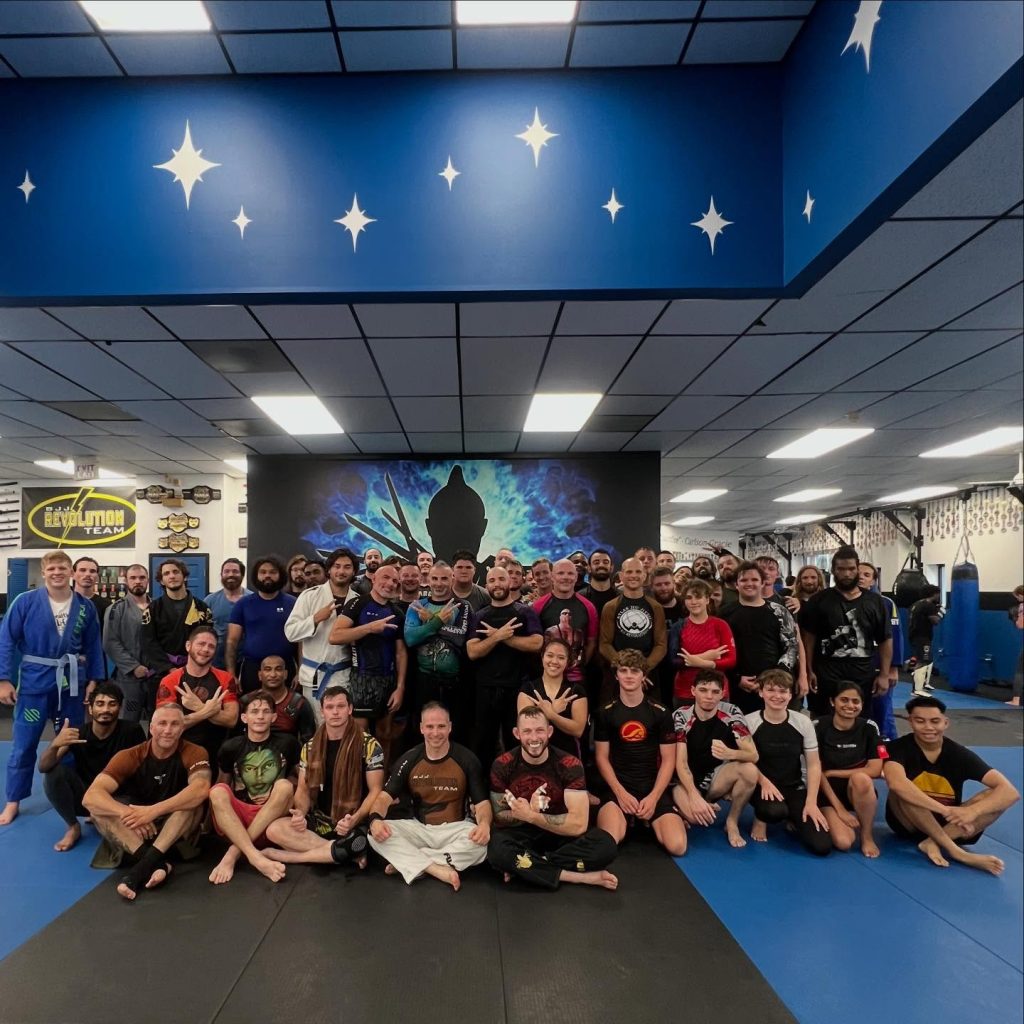
Every experienced person in the room was once a brand-new student who did not know where to stand, how to tie a belt, or what “closed guard” meant. The Atlas community will welcome you with open arms and help you learn.
Listen During Instruction
When the instructor is demonstrating a technique, stop talking and pay attention.
You do not need to remember every detail. In fact, you probably will not! Your goal at first is simply to watch, listen, and try to reproduce the basic movement with your partner.
Questions are always welcome, but allow the instructor to finish explaining the technique before asking them.
Be a Good Drilling Partner
When practicing a technique, your partner is trying to learn just like you are.
Do not turn every drill into a competition.
If the instructor is teaching an armbar and your job is to let your partner practice the armbar, do not suddenly fight as hard as possible to prevent them from doing it. Give the appropriate amount of resistance for the drill.
When it is your turn, your partner should do the same for you.
Tap Early
If you are caught in a submission, tap.
You can usually tap your training partner several times with your hand. If your hands are trapped, tap with your foot or clearly say “tap.”
There is no prize for seeing how much discomfort you can tolerate during a normal training session.
Especially when you are new, you may not recognize when a joint lock is becoming dangerous. Tapping early and resetting is the smart way to learn.
Stop Immediately When Your Partner Taps
The other side of tapping is equally important.
If your training partner taps physically or verbally, release the submission immediately.
Do not apply a little more pressure first. Do not ask whether they are sure. Just let go.
You Do Not Have to Roll If You Are Not Ready
Most jiu jitsu classes end with live sparring, commonly called “rolling.”
Some instructors allow first-day students to roll. Others require beginners to complete several classes before participating in live rounds.
If rolling is optional and you are uncomfortable, it is perfectly reasonable to sit out and watch.
If you do participate, please tell your partner that you are brand new. An experienced training partner should adjust accordingly.
Do Not Try to "Win" Your First Class
Your first day is not a test.
You are not expected to beat anyone, escape every position, or prove that you are tough.
Using every ounce of strength you have usually makes learning harder and increases the risk that you accidentally hurt yourself or your training partner.
Try to relax, breathe, listen, and pay attention to what is happening.
Respect Your Training Partners
Good BJJ training depends on trust. You are allowing another person to practice techniques that could injure you if they were applied recklessly, and they are extending the same trust to you.
That means:
- Do not intentionally hurt your partner.
- Do not crank submissions suddenly.
- Do not continue after a tap.
- Do not make fun of less experienced students.
- Do not treat every round like the finals of a world championship.
- Let your partner know if you have an injury they should be aware of.
- Respect someone’s decision if they decline a roll.
Every Academy Has Its Own Rules
Brazilian jiu jitsu has plenty of traditions, but there is no single universal rulebook for gym etiquette. There are five unique Atlas Jiu Jitsu locations operating throughout the country, and the instructors at each gym teach in unique ways.
One academy may require students to bow before stepping onto the mat. Another may not. Some require specific uniform colors. Some prohibit certain types of rash guards. Some have strict rules about where students place their shoes or bags.
When you arrive, pay attention to what the instructor and experienced students are doing. If you are unsure about something, ask.
We don’t expect our first-time students to already know the academy’s customs. We will help you learn.
What to Bring to Your First BJJ Class
- Clean athletic clothes or a clean gi (if you already have one)
- Clean underwear.
- Flip-flops or slides for walking off the mat and using the restroom.
- A water bottle.
- A hair tie if you have long hair.
- A change of clothes for after class if you want one
The Most Important First-Day Rule
You do not need to know jiu jitsu before coming to jiu jitsu!
Show up clean, wear clean gear, keep your shoes off the mat, stay home if you’re sick, listen to your instructor, respect your training partners, and tap when you need to.
The technical part is what you are coming to class to learn.